Dry-bag Cold Isostatic Press Machine
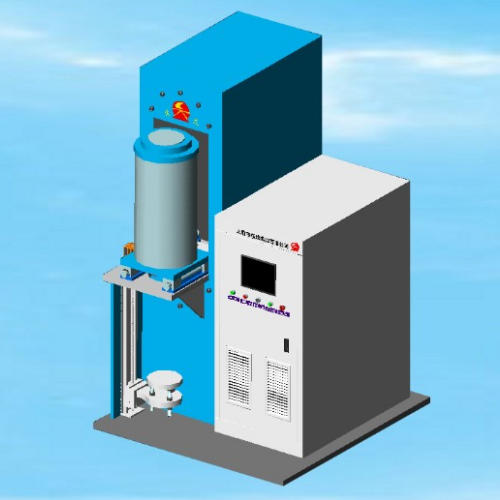
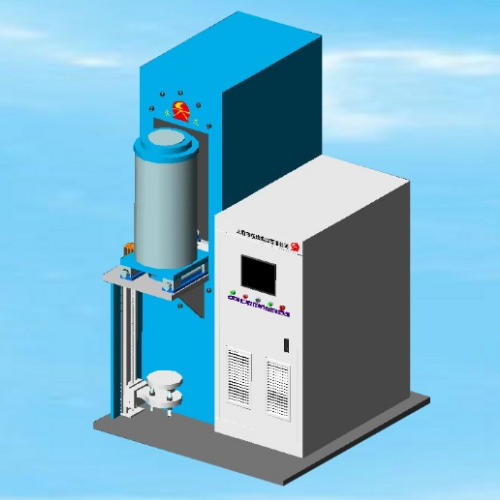
The main difference between dry-bag and wet-bag cold isostatic presses lies in the fact that the forming mold sleeve does not come into contact with the working medium; the forming mold sleeve remains dry. Typically, a sealing bag fitted against the cylinder wall is fixed inside the working cylinder and supported by a perforated steel cover. The lip of the sealing bag presses tightly against the inner wall of the working cylinder, forming a sealed space and confining the liquid working medium within it. This ensures that the forming mold and other components outside the sealed space do not contact the working medium, hence the forming mold sleeve remains dry. The forming mold filled with powder inside the working cylinder can be raised into the working cylinder via an external lifting system. The high pressure formed by the working medium within the sealing bag during pressurization is transmitted to the surroundings of the forming mold through an intermediate rubber sleeve. After undergoing the process of pressurization - pressure holding - pressure release, and once the powder is compacted, the mold is lowered out of the cylinder by the lifting system for the next steps of part removal and refilling with powder, thus proceeding to the next work cycle. Powder filling and compact removal can be performed either inside or outside the cylinder, each method having its own advantages and disadvantages.
Actually, strictly speaking, the dry-bag cold isostatic press is only a quasi-isostatic press. The ends of the compact experience significantly less force compared to the surrounding areas. That is, the pressure applied to the powder is not entirely equal in all directions. However, this has no impact on the forming of thin-walled cylindrical or disc-shaped powder compacts, leading to its widespread adoption. It is widely used for compacting powder products in various industries such as carbon graphite, ceramics, magnetic materials, refractory materials, hard alloys, iron-based alloys, and high-specific-gravity alloy powder products.
The characteristics of using a dry-bag cold isostatic press are as follows:
1. It enables semi-automated batch production, improving production efficiency and reducing production costs.
2. The fully enclosed internal circulation avoids contamination of the press pressure relief valve and the production site caused by impurities in the liquid medium. It is suitable for industrial batch production.
3. The equipment has a low failure rate and low maintenance costs.
4. The pressed compacts have high density and uniform structure, ensuring product straightness and roundness, with small sintering shrinkage, ease of processing, significantly reduced internal stress, and resistance to deformation.
5. It can form slender rods or tubular green compacts that are difficult to prepare by conventional die pressing.
I. Overall Configuration and Composition:
Our company produces dry-bag cold isostatic presses mainly in three structural types: Type A, Type B, and Type W. Type A is for pressures below 200 MPa, where the working cylinder is not wire-wound and has no frame. Type B has a frame, and both the working cylinder and frame are prestressed wire-wound, designed for pressures above 200 MPa. Type W is a horizontal model with a frame, where both the working cylinder and frame are wire-wound, suitable for pressures above 200 MPa. It is primarily used for applications where the vertical machine height would be excessive or based on specific customer requirements.
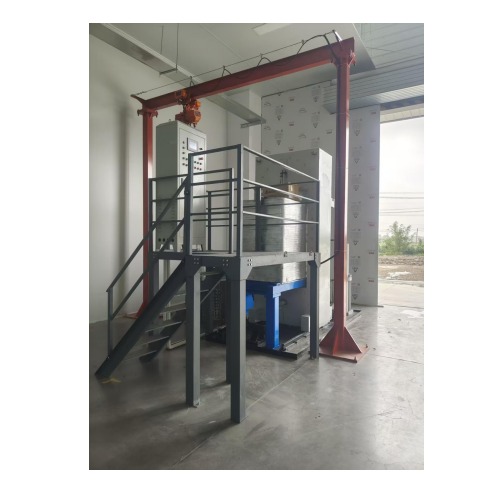
The dry-bag Type B cold isostatic press produced by our company mainly consists of four parts: the main unit (including the working cylinder, frame, and intensifier system), the hydraulic control system, the electrical control system, and the fluid replenishment (pre-pressurization) system.
The GDJ200/500-250-B dry-bag cold isostatic press has a working cylinder diameter of 250mm (mold sleeve outer diameter 200mm); the mold sleeve length is 600mm. The Type B dry-bag machine is a frame-type model where both the frame and working cylinder are pre-strained tensioned wire-wound. It is designed and manufactured for compacting rods, tubes, and disc-shaped components at high pressures (200–300 MPa).
An external vibration filling table can be added if required by the user (at an additional cost). After filling is completed on the external vibration filling table, the mold is manually placed on the plug lifting table. After the pressing cycle is completed, the mold is ejected outside the working cavity as the lower plug descends. It is then manually removed, placed on the filling table for compact extraction, and then pushed back into the filling position for automatic filling and vibration compaction.
This model features a fixed frame and a movable working cylinder structure. The plug is vertically raised and lowered, self-centering, and of the opening/closing type. Pressurization is achieved using a two-way reciprocating continuous intensifier. A manual pressure relief device is added. The control system uses a PLC (Programmable Logic Controller) + HMI (Human-Machine Interface), enabling both automatic and manual control modes.
1. The main frame and working chamber are both manufactured using precisely calculated pre-strained tensioned spring steel wire winding. The main load-bearing components are precision-made from high-grade, high-quality alloy steel forgings, providing a solid foundation for ensuring a long service life (≥200,000 cycles). The entire machine has a beautiful appearance (with cover), compact structure, long service life, and safe and reliable functionality.
2. The hydraulic control system uses hydraulic valves produced with introduced advanced foreign technology, ensuring precise control and flexible, reliable operation. Filters and cooling devices are installed in the pipelines to ensure reliable operation of the hydraulic system in a clean fluid environment.
3. The electrical control system uses a PLC plus an HMI touch screen interface. It features pressing trend display, fault alarm display and recording, real-time display of process parameters, setting and storage of pressing process parameters, and other functions. It achieves convenient and reasonable operation, precise control, and seamless integration of program design with the equipment's working process. Pressure is displayed digitally (directly showing the working cylinder pressure). The pressure holding time can be set arbitrarily as needed (within the adjustable range). Automatic or manual operation can be selected.
4. Safety performance is reliable. In addition to the frame and working chamber being designed and manufactured using the leak-before-burst principle wire-winding technology, an emergency stop switch and a manual pressure relief device are also provided.
5. The working medium in this machine adopts a closed device, meaning the forming mold sleeve does not contact the working medium. This facilitates operation, reduces contamination inside the cylinder and the environment, results in a low failure rate, and reduces maintenance and production costs.
6. Pressurization uses a two-way reciprocating continuous intensifier, which offers fast pressurization speed and low failure rate. It also has an automatic pressure compensation function in case pressure drop exceeds limits during long pressure holding times.
7. This machine is equipped with an automatic fluid replenishment (pre-pressurization) system. It can first replenish any fluid deficiency in the working cylinder and then perform pre-pressurization (10-20 MPa), effectively shortening the intensification time and improving work efficiency.
8. The sealing device of this machine uses imported material seals, ensuring reliable sealing and long service life.
Technical Parameters
No. | Parameter Name | Unit | Parameter Value | Remarks |
1 | Working Chamber Inner Diameter | mm | 250 | High-grade Alloy Steel Forging |
2 | Working Chamber Effective Inner Diameter | mm | 200 | Outer Diameter of Mold inside Chamber |
3 | Working Chamber Effective Depth | mm | 600 | Length at Both Ends of the Mold |
4 | Maximum Working Chamber Pressure | MPa | 250 | Adjustable (Set) |
5 | Working Medium | Oil | ||
6 | Fluid Replenishment Device | Set | 1 | Automatic Fluid Replenishment, Pre-pressurization |
7 | Manual Device | Set | 1 | Manual Pressure Relief when necessary |
8 | Pressure Holding Time | s | 0-999 seconds | Settable |
9 | Pressure Drop (after 5 min holding) | MPa | ≤3% | |
10 | Hydraulic Station Max. Working Pressure | MPa | 31.5 | |
11 | Hydraulic Station Max. Temperature Rise | °C | 60 | |
12 | Operating Temperature | °C | Ambient Temperature ≥10 | |
13 | Total Weight | Ton | Approx. 6 | |
14 | Total Power | kW | Approx. 18 | |
15 | Overall Dimensions (LWH) | mm | Approx. 1602*1490*2445 |