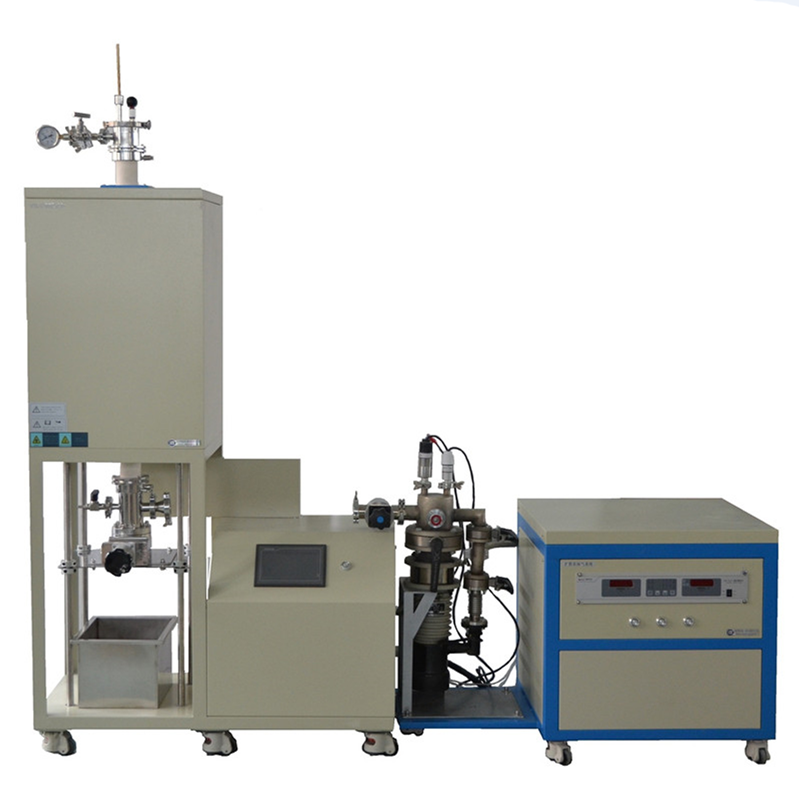
Laboraty 1700C High Vacuum Vertical Quenching Furnace
Technical parameters
Model | VTL1700-I | VTL1700-II | VTL1700-III |
Power | 7.5KW | 7.5KW | 7.5KW |
Tube size | Dia60(OD)X1000mm | Dia80(OD)X1000mm | Dia100(OD)X1000mm |
Dimension(LXDXH) | 2000X600X1800mm | 2000X600X1800mm | 2000X650X1800mm |
Supply voltage | 220V/380V | ||
Phase | Single phase | ||
Heating element | Type 1800 silicon molybdenum rod | ||
Tube | Corundum tube: high purity AIO ceramics (containing) 99.5% | ||
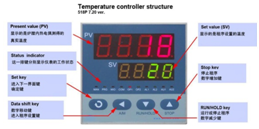
Control mode | Use Yudian program temperature control instrument (standard) 1. 50-segment program temperature control intelligent PID adjustment. 2. With over-temperature protection. The electric furnace heating circuit is automatically cut off when over-temperature protection or over-temperature protection occurs. (When the temperature of the electric furnace exceeds 1720 degrees or the thermocouple is blown, the AC relay on the main circuit will be automatically disconnected, the main circuit is disconnected, the ON light on the panel is off, the OFF light is on, and the electric furnace is limitedly protected). 3. With 485 communication interface (standard configuration when purchasing software). 4. It has a power failure protection function, that is, when the furnace is powered on after the power is turned off, the program does not start from the initial temperature, but starts from the furnace temperature when the power is turned off. 5. The meter has the function of temperature self-tuning. (replacement of imported instruments requires additional payment and purchase)
FP93 control instrument EUROTHERM Touch screen (SHIMADEN) | ||
Break couple protection and display | Yes | ||
Over-temperature protection | Yes | ||
Overcurrent protection | Yes | ||
Control precision | +/- 1 ℃ | ||
Flip-flop | Phase-shifted trigger | ||
Electric appliance | Zhejiang chint | ||
Silicon controlled | 106/16E SEMIKRON | ||
Max temp | 1700 ℃ | ||
Rated temp | 1650 ℃ | ||
Heating rate | ≤20 ℃/ Min (can be modified as required) | ||
Recommended heating rate | ≤5℃/ Min | ||
Thermocouple Type | B | ||
Heating length | 300mm | ||
Electrical certification | CE | ||
Ambient surface temp | ≤45℃ | ||
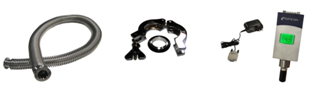
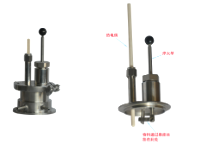
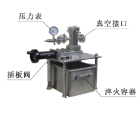
Vacuum seal flange and valve | 1. A stainless steel sealing flange and stainless steel needle valve are installed on the top of the furnace body. 2. A bottom plate valve, a non-mechanical pressure gauge, and a KF25 vacuum interface are used to connect the vacuum pump at the bottom of the furnace body. 3. Vacuum degree: The vacuum degree of the mechanical pump can be less than 1Pa. If you want to obtain a higher vacuum degree, you can choose a domestic or imported high vacuum unit. The vacuum degree can reach 10-3Pa. Optional: The following accessories increase vacuum efficiency. 4. KF25 stainless steel bellows, KF25 quick remover clamp. 5. Optional anti-corrosion digital vacuum gauge with a measurement range of 3.8x10⁻⁵ to 1125 Torr. No coefficient conversion is required due to different types of measurement gases. 6. A hanging device (maximum load capacity: 1000 g) is installed on the top flange, as shown in Figure 2. The sample is suspended from the hook using a suspension wire. When the quenching rod is pressed, the sample together with the suspension wire falls into the quenching box. Before releasing the sample, the system must be filled with argon at 5 PSI, and the manual gate valve at the bottom of the furnace tube must be opened.
| ||
Quenching container
| 1. A stainless steel box for holding the quenching liquid is fixed at the bottom of the furnace tube. 2. A large manual plug valve is installed between the bottom of the furnace tube and the liquid box. | ||
High vacuum system | TK100 high vacuum diffusion pump set | ||
Warranty period | One year warranty and lifetime technical support Special Note: 1. Consumable parts such as heating elements, furnace tubes, sample crucibles, etc. are not included. 2. Damage caused by the use of corrosive gases and acid gases is not covered by the warranty. | ||

Precautions
The gas pressure inside the furnace tube must not exceed 0.02 MPa.
Since the gas cylinder internal pressure is high, a pressure reducing valve must be installed on the gas cylinder when introducing gas into the furnace tube. To ensure safety, it is recommended to use a pressure below 0.02 MPa.
When using a corundum tube (alumina tube) as the furnace tube, if the furnace temperature exceeds 1500°C, the furnace tube must not be under vacuum. The pressure inside the tube should be equivalent to atmospheric pressure.
The gas flow rate into the furnace tube must be less than 200 SCCM to avoid thermal shock to the hot tube from cold gas flow.
For experiments involving sample heating, it is not recommended to close both the vacuum valve and the gas inlet valve at the flange end. If it is necessary to close the valves during sample heating, the pressure gauge reading must be constantly monitored. If the pressure gauge reading exceeds 0.02 MPa, the exhaust valve must be opened immediately to prevent accidents (such as tube rupture or flange ejection).
Do not use graphite crucibles inside an alumina tube.
MoSi₂ heating elements must not be operated at low temperatures (400°C – 700°C) for extended periods, as this may damage the heating elements.
The sample is fixed by high-temperature resistant wire onto the hanging hook at the bottom of the flange. (Note: The wire supplied as standard with our furnace has a maximum operating temperature of 1200°C. If the customer requires operation above 1200°C, specialized high-temperature resistant wire can be purchased from our company. Please contact our sales team for details.)